WL Hub — White Label Client Management Tool
Every new white label client meant the same manual process. Assets scattered across emails and Slack, no checklist for what was needed, constant back-and-forth on file formats. Half the clients didn't even have proper branding materials. I designed and shipped an internal tool that replaced all of it.
Claude Code, Internal Ops, B2B SaaS

This was a side project. 10% of my workload over three months. I ran the research, designed the tool, built it myself using AI-assisted coding, and deployed it to production. No developers were involved.
Key contributions
Proposed the project, wrote the brief, and got buy-in from leadership
Mapped the full white label process from pre-sales to maintenance
Designed and validated the tool with the stakeholder who'd use it daily
Built and deployed the production application myself using Claude Code
Understanding a broken process
The company offers white-labeled versions of its platform to partner organizations. Every new client means collecting branding assets, applying them across the portal, mobile app, cards, and emails, then going through review and sign-off. When I started looking into this, there was no centralized system for any of it.
I interviewed the person who managed this process day-to-day. The picture was clear: assets arrived through whatever channel the client preferred, requirements were tracked in spreadsheets, and there was no standardized way to validate what had been collected before handing off to design and development. Over half the clients lacked proper branding materials. Some sent logos scraped from their own website.
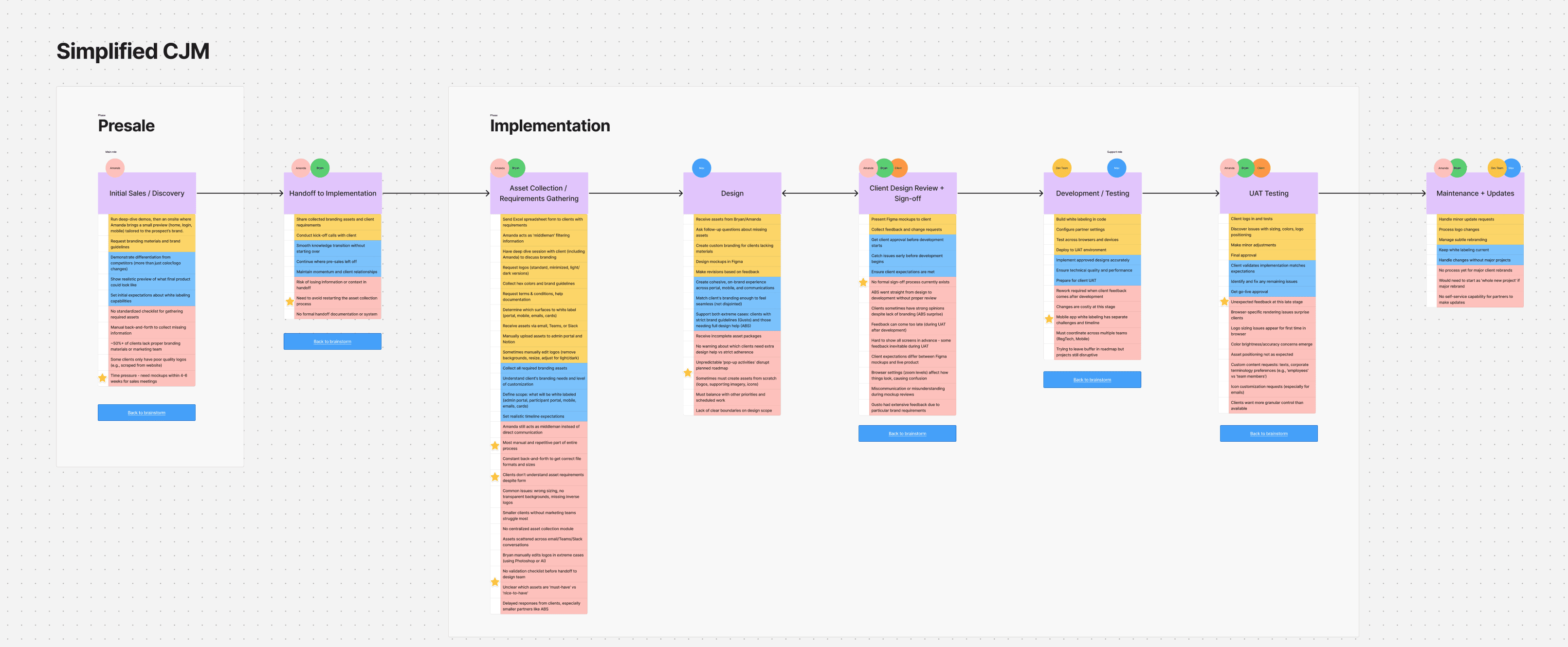
CJM. Full white label process from presale through maintenance
I mapped the entire journey: pre-sales, asset collection, design, client review, development, testing, handoff, and ongoing maintenance. Each phase had its own set of pain points. The research showed that the biggest bottleneck wasn't any single step. It was the lack of structure across all of them.
From pain points to solutions
For each key problem, I framed a "How Might We" question and ran a brainstorming session with the team. We prioritized solutions into four categories: setting clear expectations with clients, creating a standardized checklist, building an internal tool, and rethinking how work gets assigned.
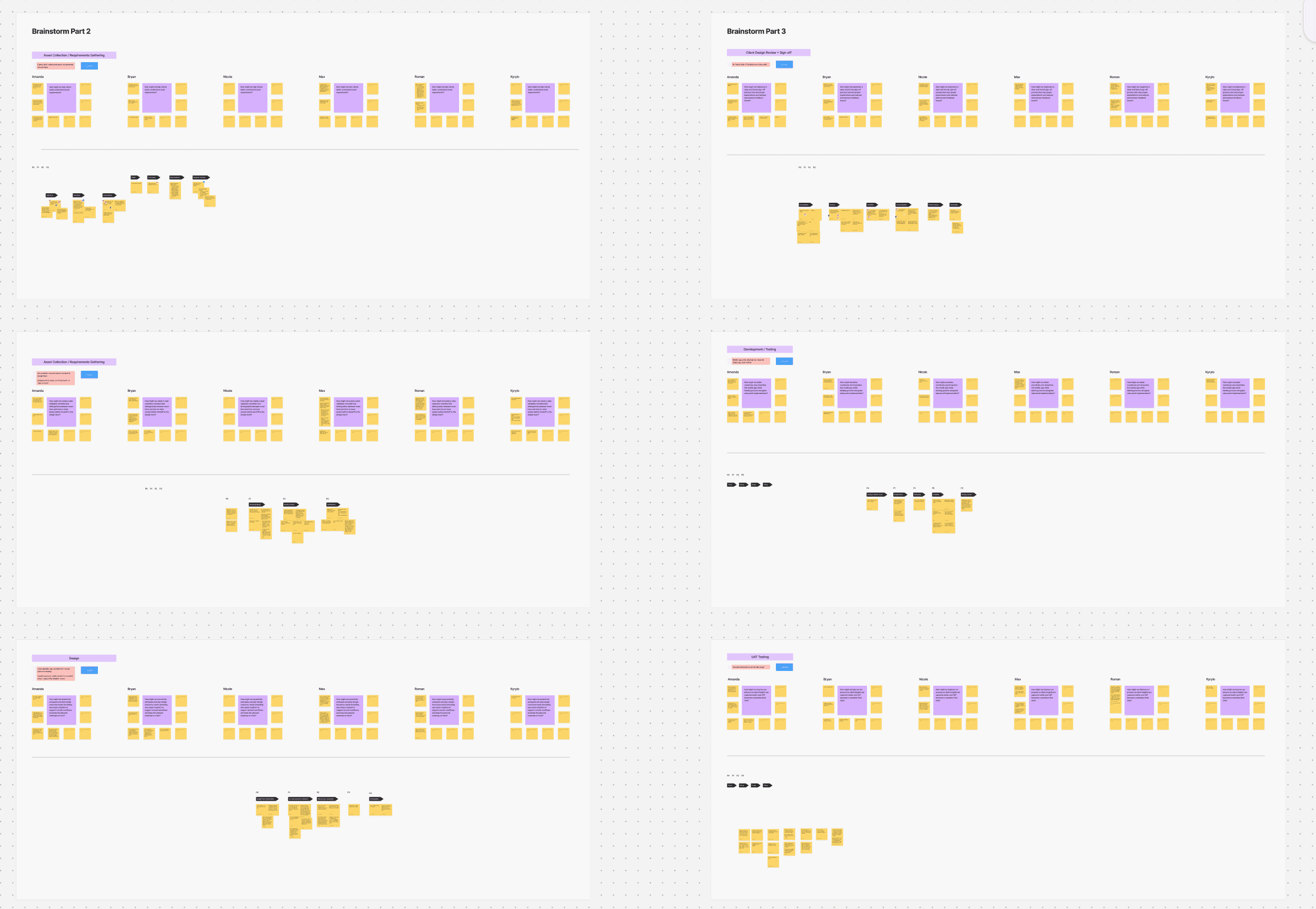
HMW brainstorming with prioritized solutions
The tool that emerged wasn't just a form. It needed to be a centralized hub where the team could track every client's progress through the white label process, collect and validate assets in one place, and preview how the branding would look before sending anything to development.
What I designed
The tool has three core parts.
A client management dashboard where the team sees all white label projects at a glance: which phase each client is in, who's assigned, what's blocked, what's waiting on the client. No more tracking in spreadsheets.
A client workspace with tabs for each branding surface: general identity, portal branding, card branding, email branding, and app branding. Each tab collects the specific assets needed and shows a live preview of how they'll look applied to the product. Brand colors set in the general section cascade across all tabs automatically.
A preview generator for pre-sales. A quick tool where the team can upload a prospect's logo, pick colors, and immediately see a branded version of the product. What used to take the design team a day of mockup work now takes minutes.
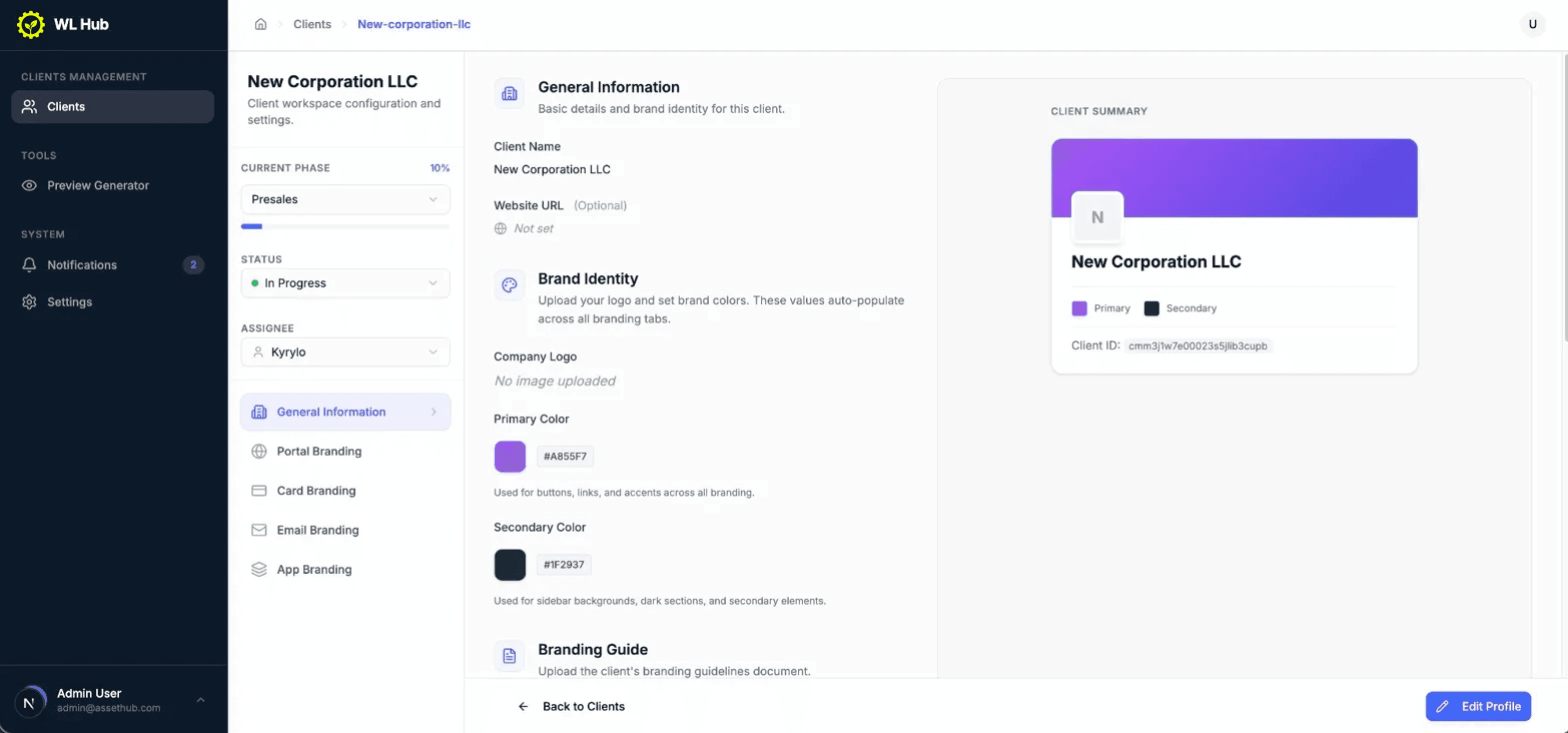
Client workspace. Brand identity setup with live preview

Card branding with digital and physical card previews
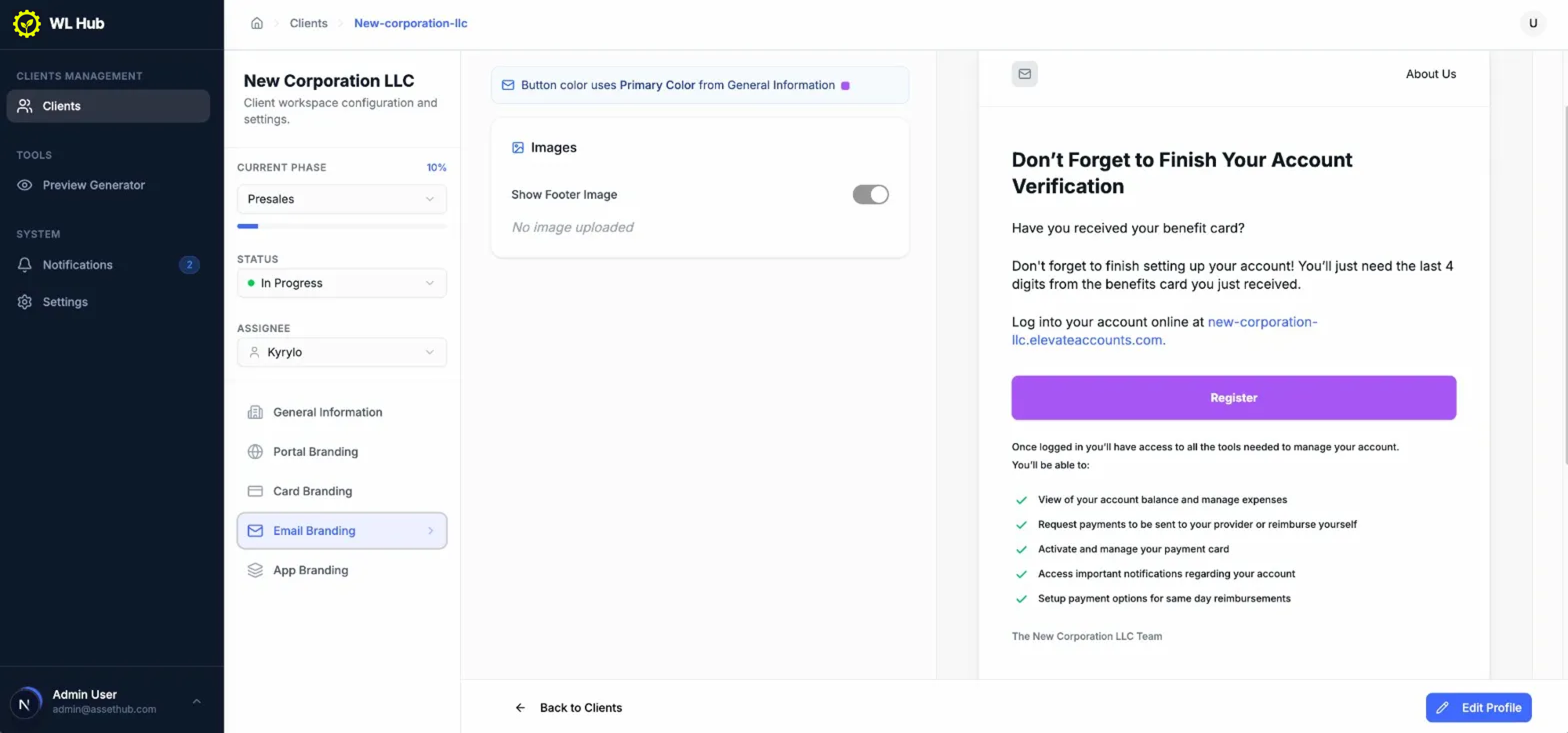
Email branding with live email template preview
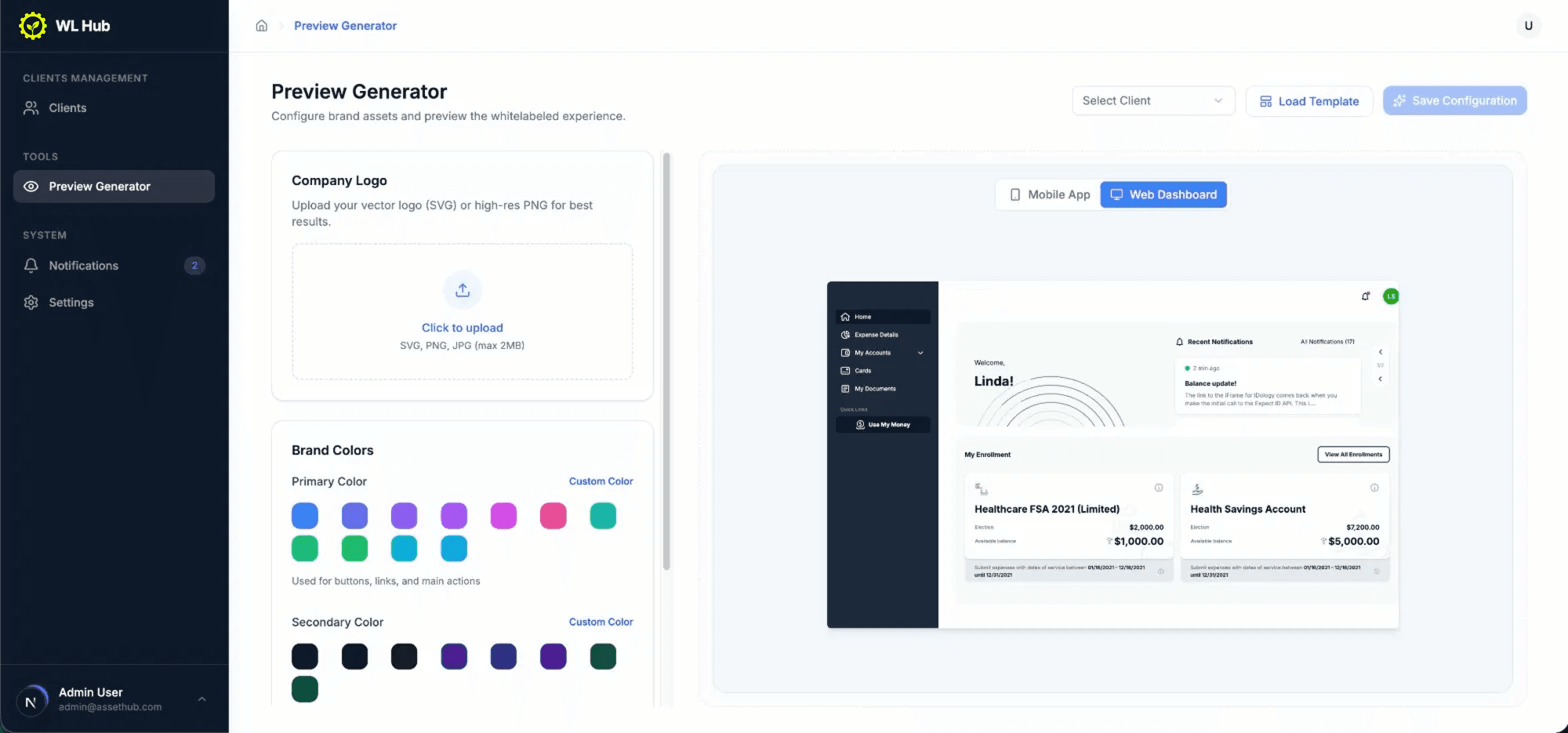
Preview generator. Upload logo, pick colors, see branded product
Building it myself
I didn't hand off designs to a development team. I built the tool myself using Claude Code. From database setup to deployed application. I researched the technical options, chose a stack that would let me ship fast, and presented the deployment plan to the CTO.
This wasn't a prototype or a proof of concept. It's a production tool that the team uses every day. A designer who can take a project from research through design to working code changes what's possible on a small team, especially when engineering resources are committed elsewhere.
Outcome
Replaced an entirely manual process.
Asset collection, progress tracking, and branding previews that used to live in spreadsheets and email threads now have a dedicated system. The team can see at a glance what's been collected, what's missing, and where each client stands.
Pre-sales previews went from days to minutes.
The preview generator eliminated the need for a designer to manually create branded mockups for every prospect. The sales team can now generate previews themselves during client conversations.
A designer-led initiative, built and shipped without developers.
I identified the problem, proposed the solution, ran the research, designed it, coded it, and deployed it. No engineering resources were used. This changed how the team thinks about what a designer can deliver.
Learnings
Small scope, full ownership.
This project was 10% of my workload. But because I owned it end-to-end, from research to deployment, it had an outsized impact. Sometimes the most valuable thing a designer can do is notice a broken process that nobody asked them to fix.
Designers can drive technical decisions.
Presenting a deployment plan to the CTO was outside my usual scope. But understanding the technical constraints and being able to recommend a realistic path to production meant this project didn't die as a Figma file.
AI-assisted coding is a real superpower for designers.
I built a production application using Claude Code without writing code from scratch myself. The research, design thinking, and domain understanding were mine. The code was generated through a conversation with AI. This is a fundamentally different way of working, and it means designers can ship things that used to require an engineering team.